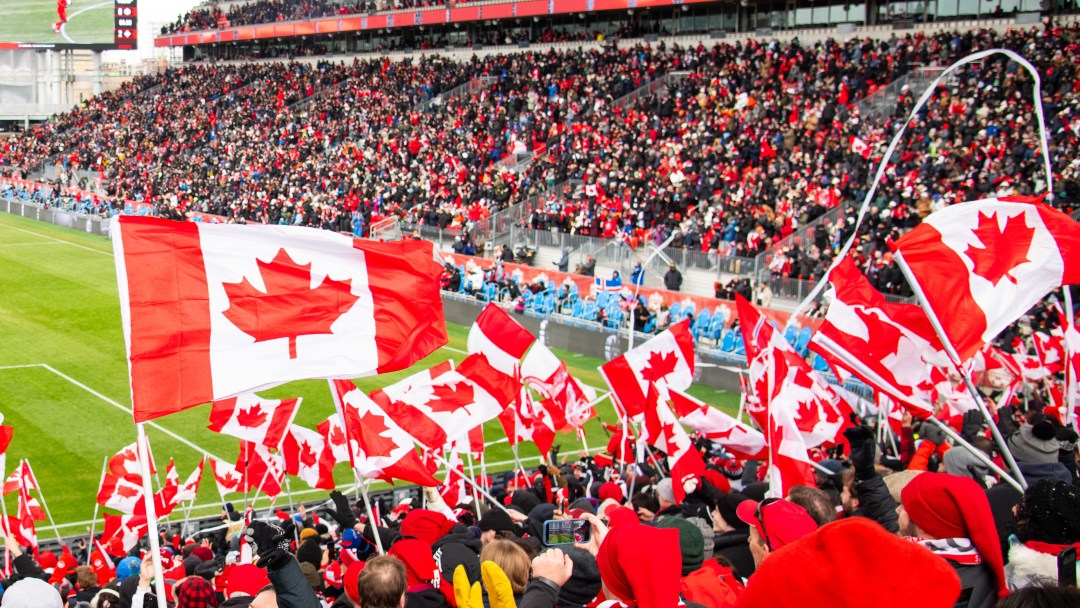
This is our house: FIFA World Cup leaves lasting impact in Toronto

The soccer stadium on Toronto’s lakeshore has seen some big games since it opened two decades ago. But nothing quite like what went down on Friday.
In front of 43,002 raucous fans, Canada claimed a dramatic, cathartic 1-1 draw with Bosnia and Herzegovina in their FIFA World Cup 2026 opener. It was the first-ever senior men’s World Cup match in Canada, and it’s a match that could have ramifications for decades to come.
Sure, Canadians have seen their national teams play in big tournaments before, be it the women winning Olympic gold at Tokyo 2020 or the men competing at Qatar 2022.
READ: How accessibility and alignment turned Canada into a soccer power
But watching on a screen is one thing; seeing those moments, and those players, live and in person is another.
Canadians got such a chance in 2015, when the nation hosted the FIFA Women’s World Cup. But Toronto, the nation’s largest city, wasn’t part of that competition, by virtue of its hosting duties for the Pan American Games that same summer.
So the arrival of the 2026 FIFA World Cup was a long time coming for fans in Toronto, as well as further afield in Ontario. Just what does it mean to fans and families who’ve been part of the festivities?
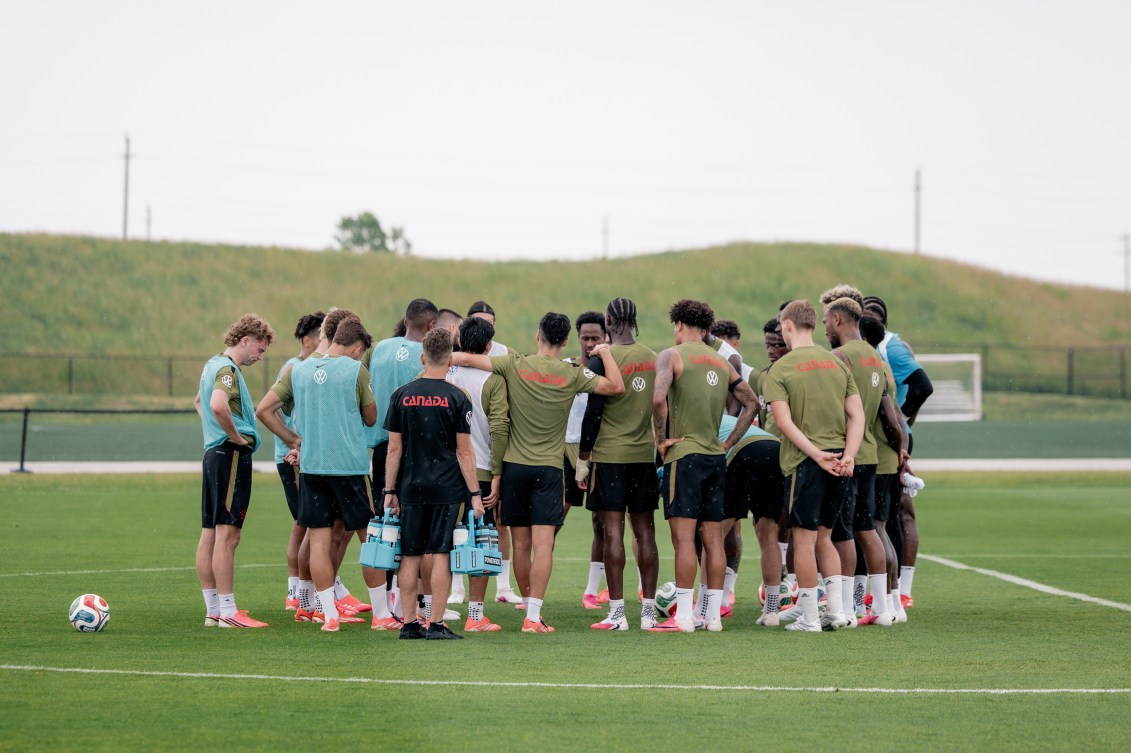
We spoke to some Canadian fans who took part in an open training session with the men’s national team on June 8 to find out.
Inspiring the next generation
The biggest impact, as is usually the case with athletic inspiration, will be on the kids.
The nation has plenty of young players; in fact, soccer is Canada’s most popular sport, with 50% of youth playing in some fashion. But for a long time, young Canadians haven’t had accessible soccer heroes, particularly on the men’s side.
That made the training session a special occasion for longtime fan Panos Kelamis, who brought his two songs Xander and Orion.
“It’s all about creating memories, and having experiences,” said Kelamis. “Showing them what professional athletes look like, wearing the Canadian shirt, it’s an awesome experience.”
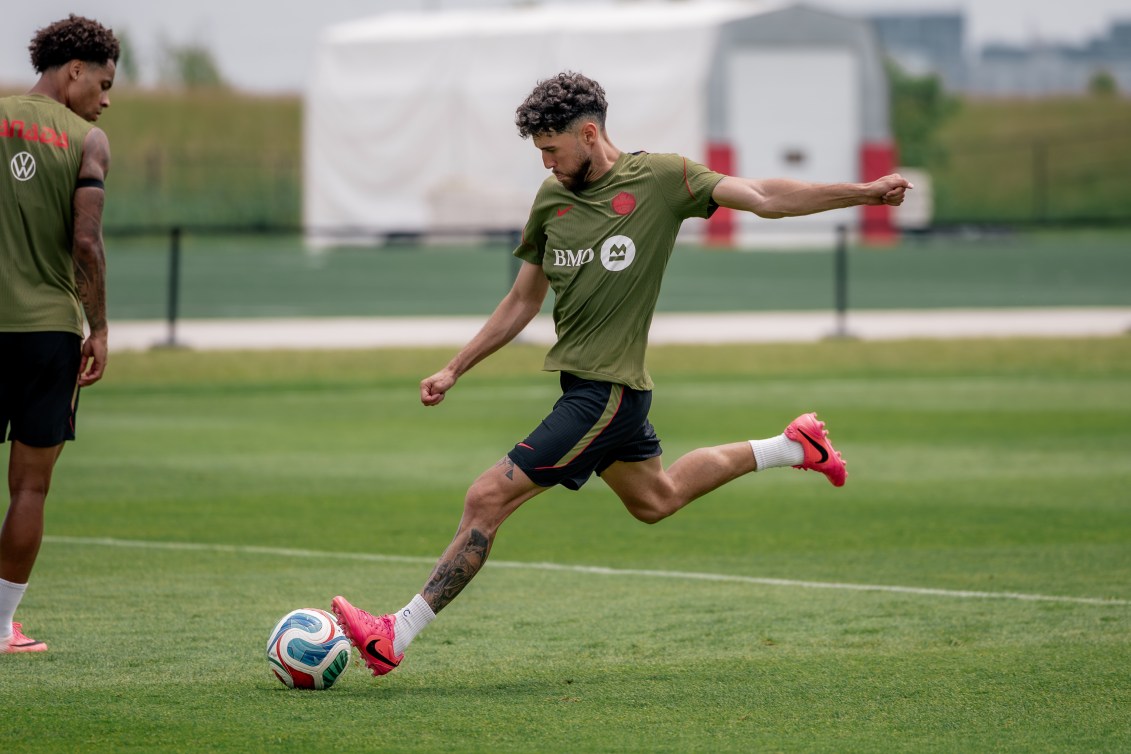
Kelamis remembers having similar experiences with his own father, and the lasting impact of those. Now, he’s given his sons the chance to get autographs from the likes of Jonathan Osorio, Stephen Eustáquio, Jacob Shaffelburg and even Canadian legend Dwayne DeRosario.
Plenty of youngsters came to the session with their club teams, including some from North York Academy FC. One of their coaches, Paolo Rogato, stressed the importance of creating a playing environment that breeds success and positive values.
“Seeing this now, first hand, this is what the kids will take back with them onto the training pitch and into the games,” said Rogato. “The love for the sport will be with them always. That’s what I feel like other countries have had over us, just over these last few years.
“Now, the fact that we’re in the World Cup, and we’re seeing our country in it, and the fact that it’s actually here, it will grow the sport that much more as a nation. That’s what I feel like we’ve needed all these years and I feel like finally we have it.”
READ: Top 12 historic moments for Canada’s national soccer teams
That idea seemed to have already landed with Aubryn, a young player who made the four-hour trip west from Cornwall.
“I’m really happy I got to experience this,” she said. “They’re really good and I want to be this good one day.”
Dreaming of the possible
She wasn’t the only one to make a long trip to be part of the festivities.
Ghislaine Goudreau coached Team Ontario to a silver medal finish in girls’ Under-19 soccer at the 2023 North American Indigenous Games. She and a few of her players made the four-hour trip south from Sudbury to attend the Canada training session.
Goudreau, an Algonquin of Pikwakanagan First Nation, says she started playing soccer at age 7, and was often the only girl on her team growing up.
“Soccer really wasn’t for girls back in the day, and when it comes to Indigenous [players], even fewer,” she said.
READ: 16 fun facts about members of Canada’s FIFA World Cup squad
But times have changed. Not only has Goudreau seen firsthand what young Indigenous players can accomplish, she’s seen a big uptick in the diversity of players in Sudbury in the past decade.
The World Cup training session could be a key event in showing children from all backgrounds what they could potentially achieve.
“It can have a huge impact, just to see that a high level,” she said. “Definitely [the game of soccer has] grown.”
The impact isn’t limited to Ontario. Team Canada has headed to Vancouver for their next two—possibly three, or even four—games at the FIFA World Cup.
How many more kids will have their athletic trajectories impacted by what’s to come?
And how many could, one day, suit up for Canada themselves?