Memories of Montreal 1976: The captivating stories and lasting legacies of the first Olympic Games in Canada

Half a century ago, Canada welcomed the world to celebrate the Games of the XXI Olympiad in Montreal.
Montreal 1976 marked the first time that Canada played host to an Olympic Games.
Now, 50 years later, we look back at some of the incredible stories from that historic summer, the athletes who captured the country’s attention, the innovations that were made, and the impact that has been felt ever since.
Torch relay sparked by a technological first
There are many traditions associated with the Olympic Games. One is that the Olympic flame is lit in Olympia, Greece by capturing the sun’s rays in a parabolic mirror. But the way the flame was transported to Canada was anything but traditional.
A sensor at the Panathenaic Stadium in Athens transformed the flame’s ionized particles into coded impulses. These were relayed by satellite to Ottawa, where a laser beam reflected in another parabolic mirror returned the flame to its original form on Parliament Hill to officially begin the 261-kilometre torch relay to Montreal.
More history made at Opening Ceremony
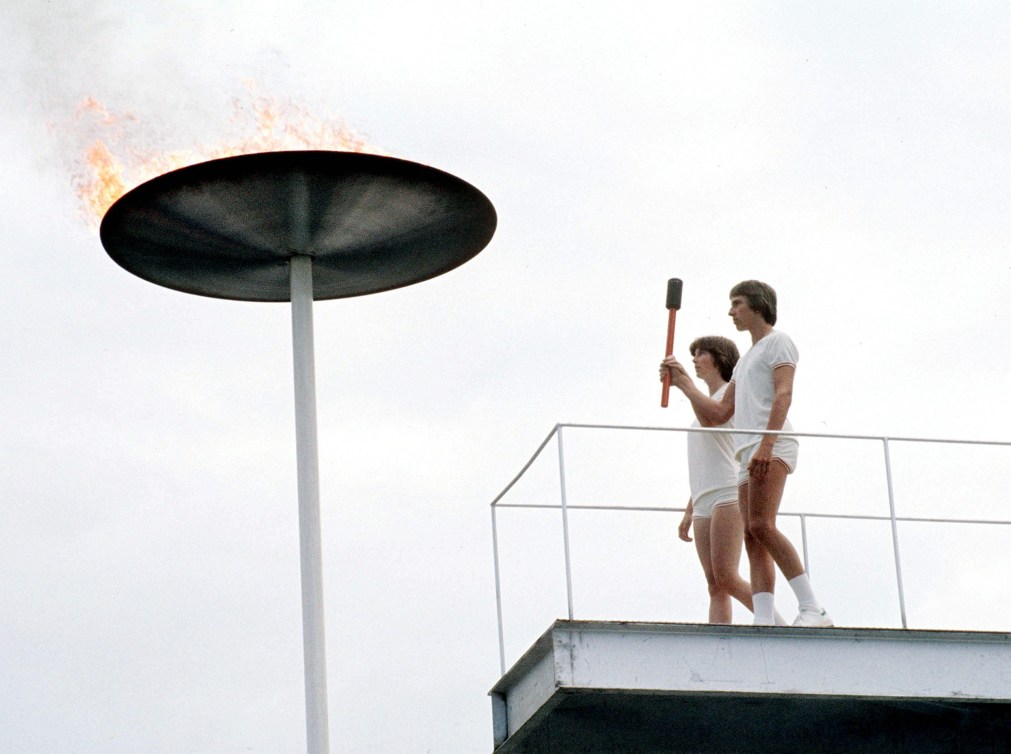
When the Olympic flame arrived at the Olympic Stadium, it set in motion another first. Sandra Henderson from Toronto and Stéphane Préfontaine from Montreal, representing Canada’s anglophone and francophone communities, jointly lit the Olympic cauldron—the first time the honour had been performed by two people.
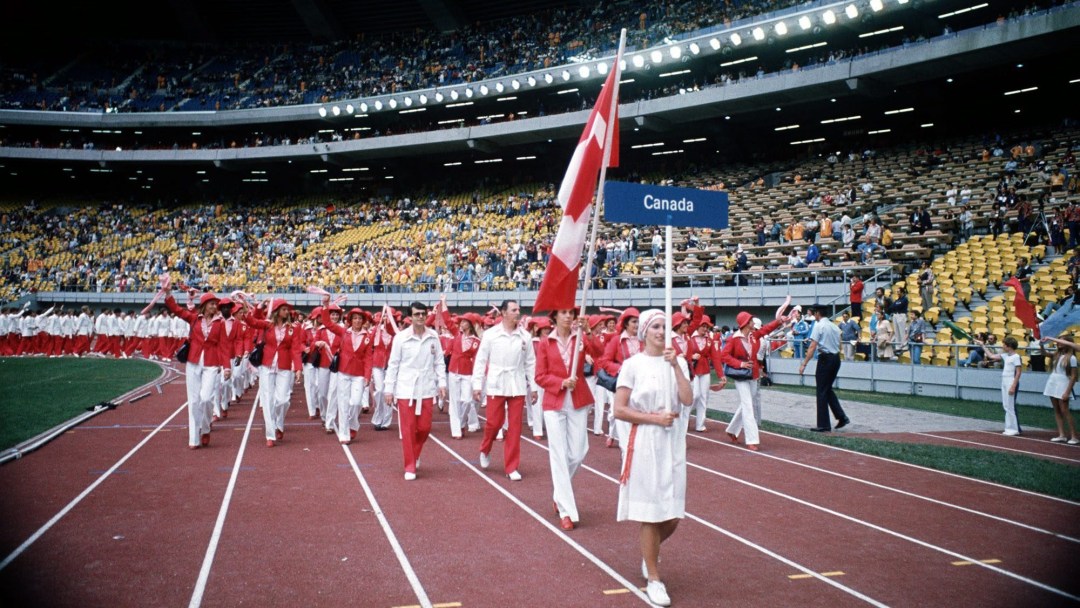
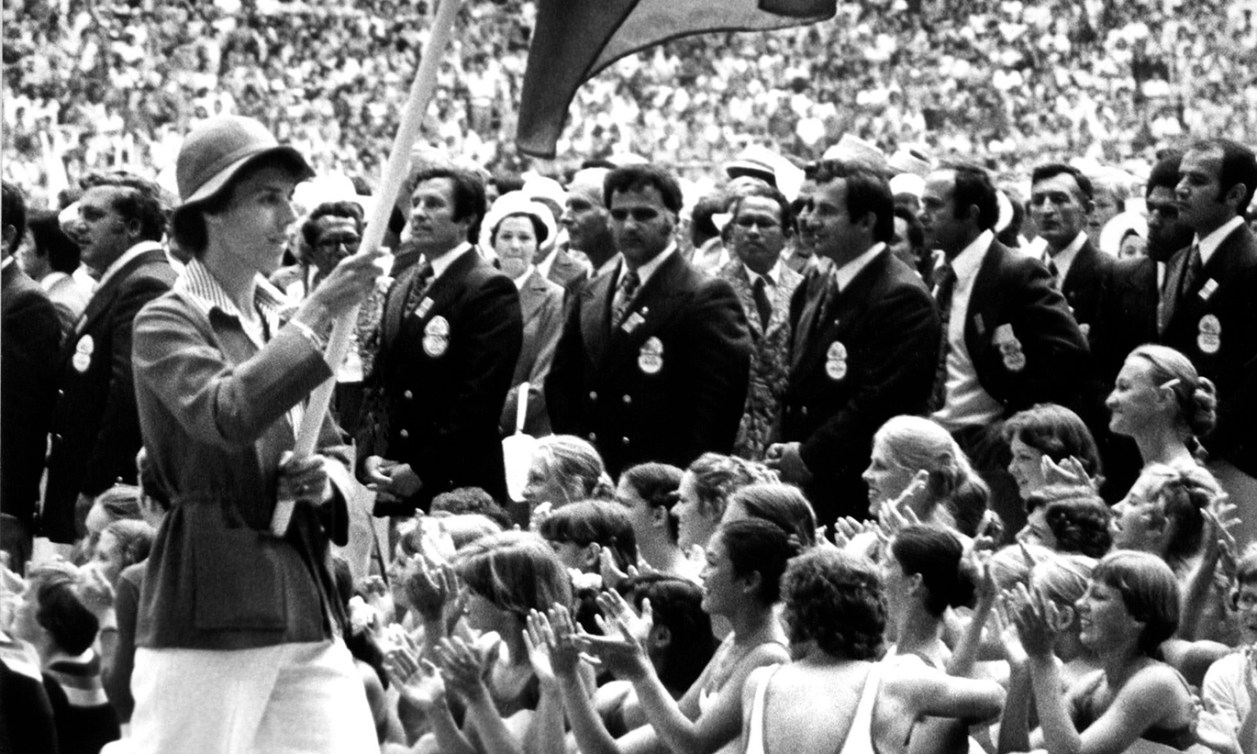
Before that climactic moment, though, there were a couple of historic moments for Team Canada. As the host nation, Canadian athletes for the first time were the last to march in the Parade of Nations. Leading the way was Abby Hoffman, the first woman to ever serve as Canada’s Opening Ceremony flag bearer at the Olympic Summer Games. She would go on to become the first woman elected to the executive of the Canadian Olympic Committee (then Association).
Canada’s memorable medal-winning moments
Canadian athletes won 11 medals at their home Games, the most the country had collected at one Olympic Games since Los Angeles 1932. Eight of those medals were won in the swimming pool.
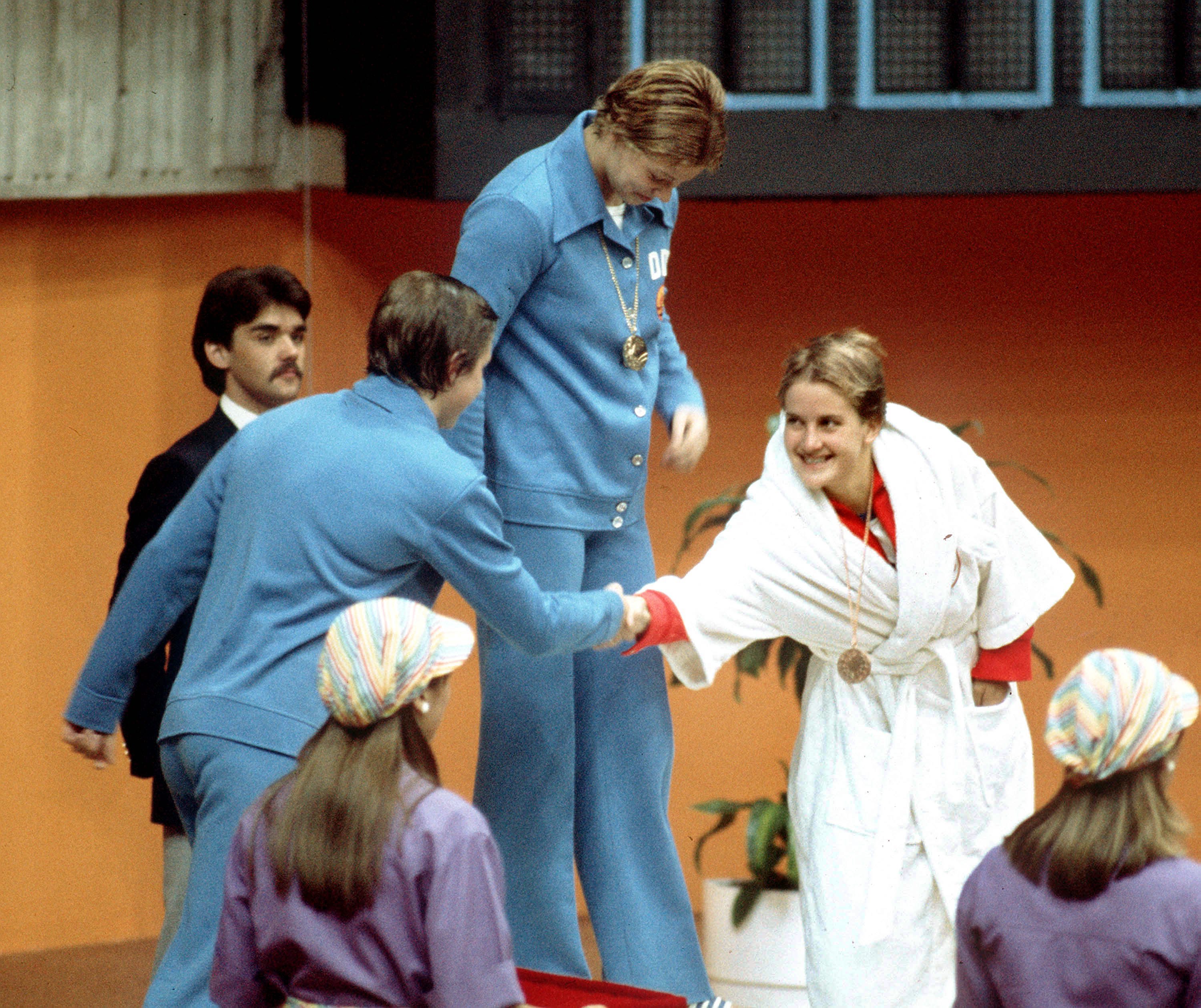
Canada’s Nancy Garapick (right) celebrates winning a bronze medal in swimming at the Montreal 1976 Olympic Games. (CP PHOTO/ COC/RW) 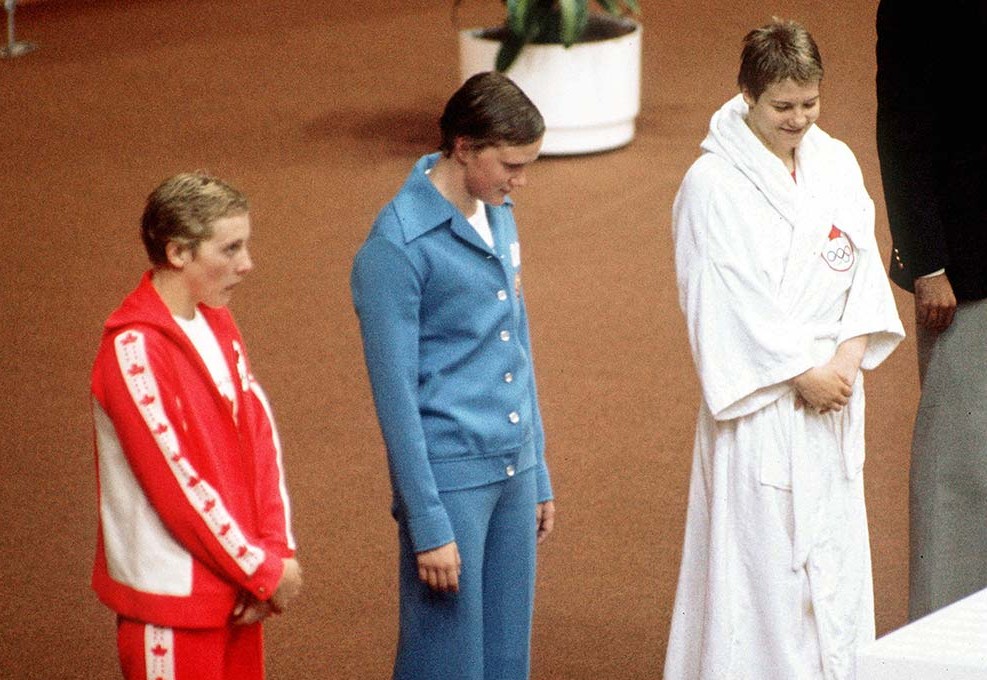
Cheryl Gibson (left) and Becky Smith (right) celebrate their respective silver and bronze medals in the women’s 400m individual medley at the Montreal 1976 Olympic Games (COC/CP Photo) 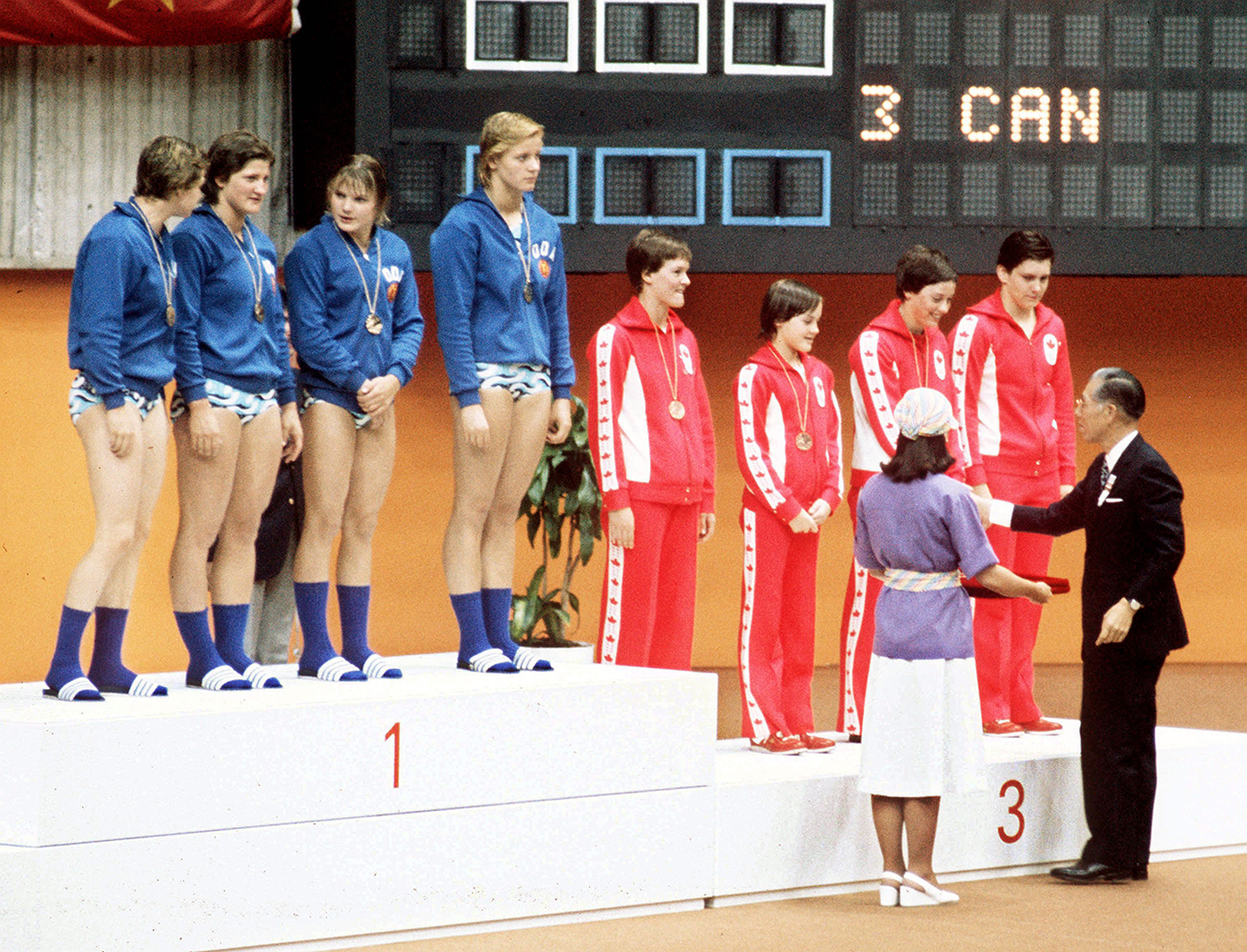
Susan Sloan, Robin Corsiglia, Wendy Hogg, and Anne Jardin receive their bronze medals in the women’s 4x100m medley relay at the Montreal 1976 Olympic Games (COC Photo)
Nancy Garapick won a pair of bronze medals in the women’s 100m and 200m backstroke events. There was a double podium by silver medallist Cheryl Gibson and bronze medallist Becky Smith in the women’s 400m individual medley. While those performances are absolutely worthy of celebration, there does remain a lingering question of ‘what if’. The only athletes to finish ahead of them were from East Germany, and as is now well known, were subjects in a state-sponsored doping program.
There was also an individual bronze medal won by Shannon Smith in the women’s 400m freestyle and Canada won bronze medals in both the women’s 4x100m freestyle and 4x100m medley relays. In the latter, 13-year-old Robin Corsiglia became Canada’s youngest ever Olympic medallist, a record that still stands. The lone men’s swimming medal was a silver in the 4x100m medley relay.
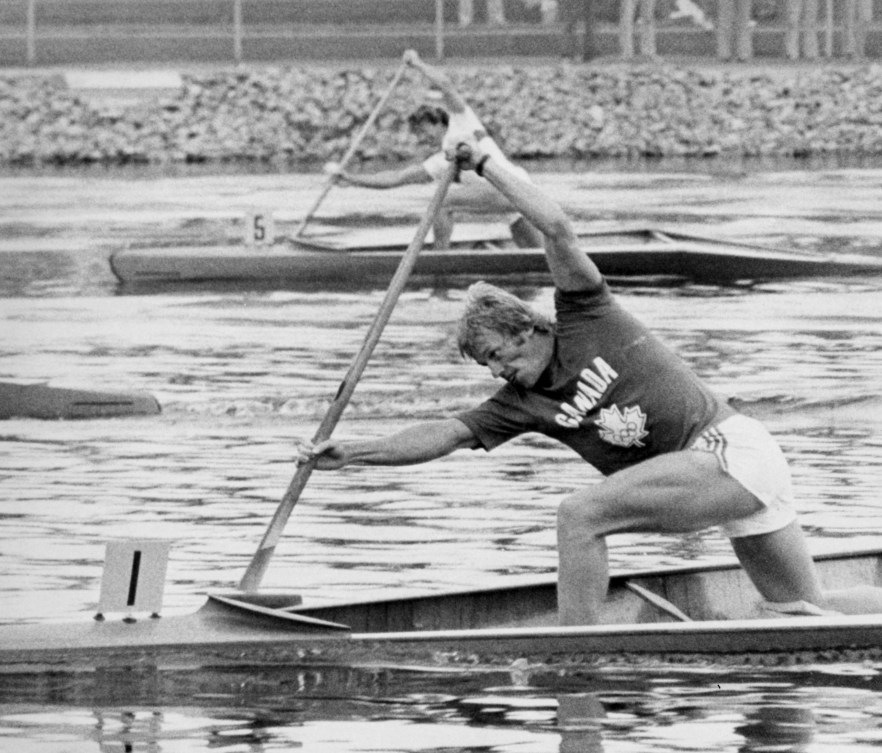
John Wood of Mississauga, Ont., churns his way towards a silver medal win for Canada in the men’s C-1 500m canoe singles event in Montreal on July 30, 1976. THE CANADIAN PRESS 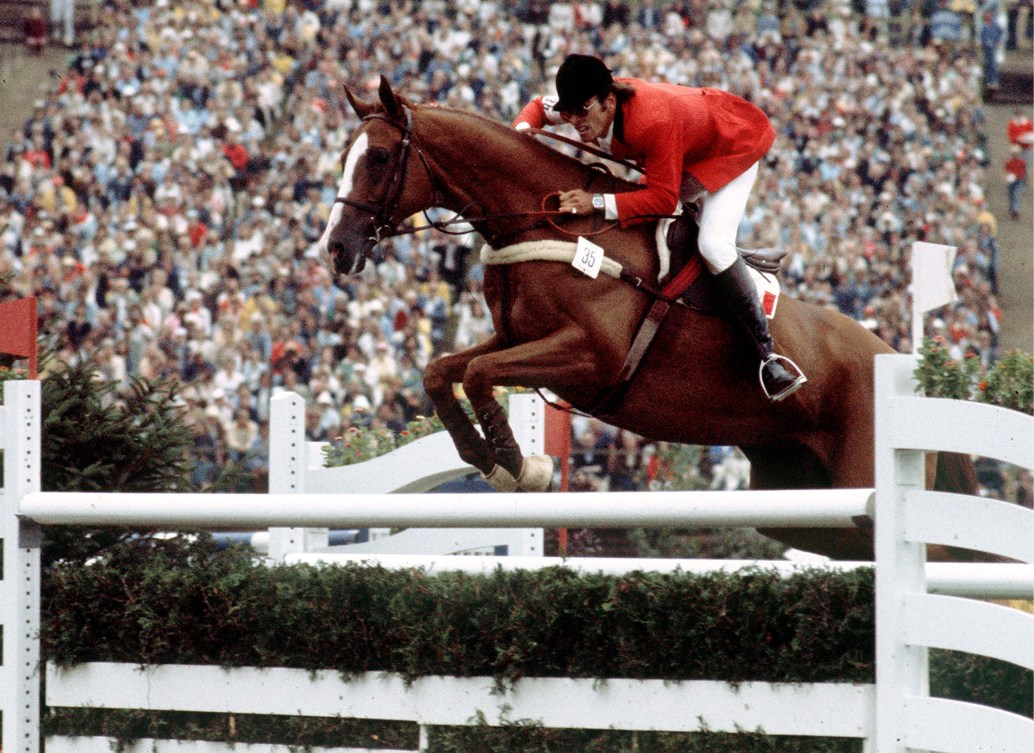
Canada’s Michel Vaillancourt rides Branch County in an equestrian event at the 1976 Montreal Olympic Games. (CP PHOTO/ COC/RW) 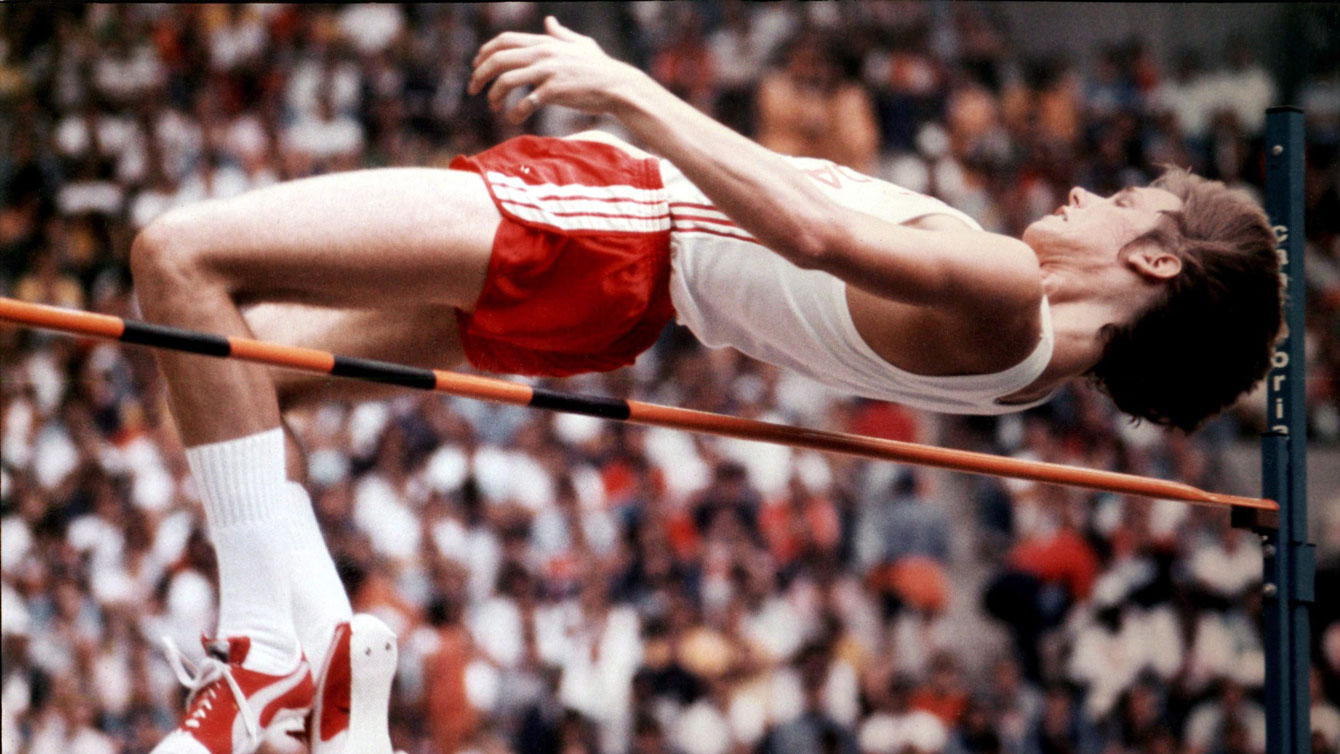
Greg Joy clears the bar on July 31, 1976, en route to an the silver medal in men’s high jump at the Montreal 1976 Olympic Games. (CP PHOTO/Fred Chartrand)
At the Olympic Basin, John Wood paddled to silver in the men’s C-1 500m for Canada’s first Olympic medal in canoe/kayak in 24 years. At the Olympic Equestrian Centre in Bromont, Michel Vaillancourt rode Branch County to the silver medal in individual jumping for Canada’s first ever individual Olympic medal in any equestrian discipline. And on the penultimate day of competition, Greg Joy overcame some rough rainy conditions to soar to high jump silver, Canada’s first Olympic medal in that event since 1932.
Other notable Canadian names
Of course, not all of Canada’s 416 athletes—the country’s biggest Olympic team ever to that point—could stand on the podium, but among them were some names that had a lasting impact on Canadian sport.
Montreal 1976 marked the Olympic debut of Tricia Smith, who after her rowing career became president of the COC in 2015 and was elected as an IOC member in 2016. And if you’re wondering, yes, the aforementioned swimmer Shannon Smith is her younger sister!
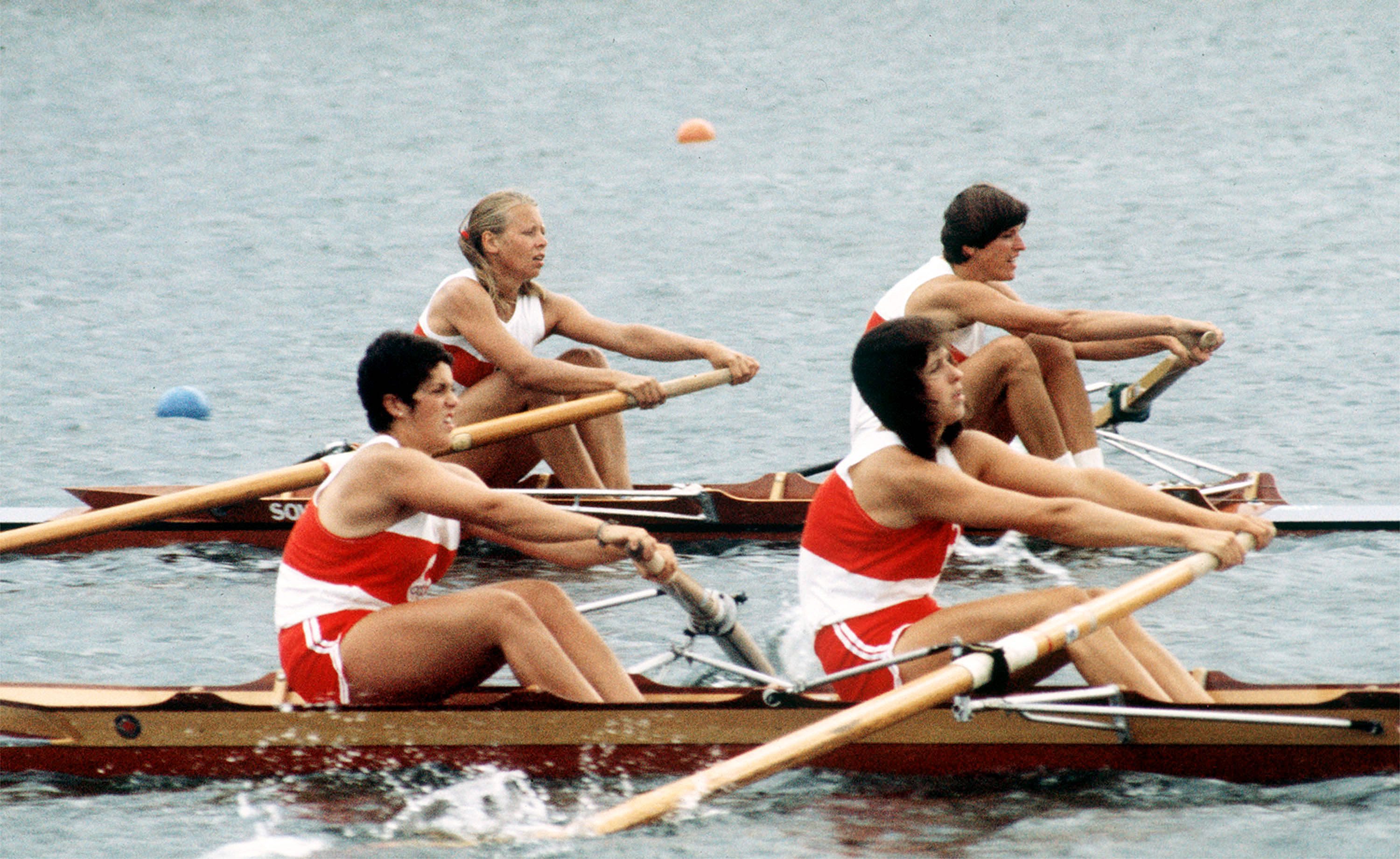
Canada’s Betty Craig and Tricia Smith (foreground) compete in the women’s 2x rowing event at the 1976 Montreal Olympic Games. (CP Photo/COC) 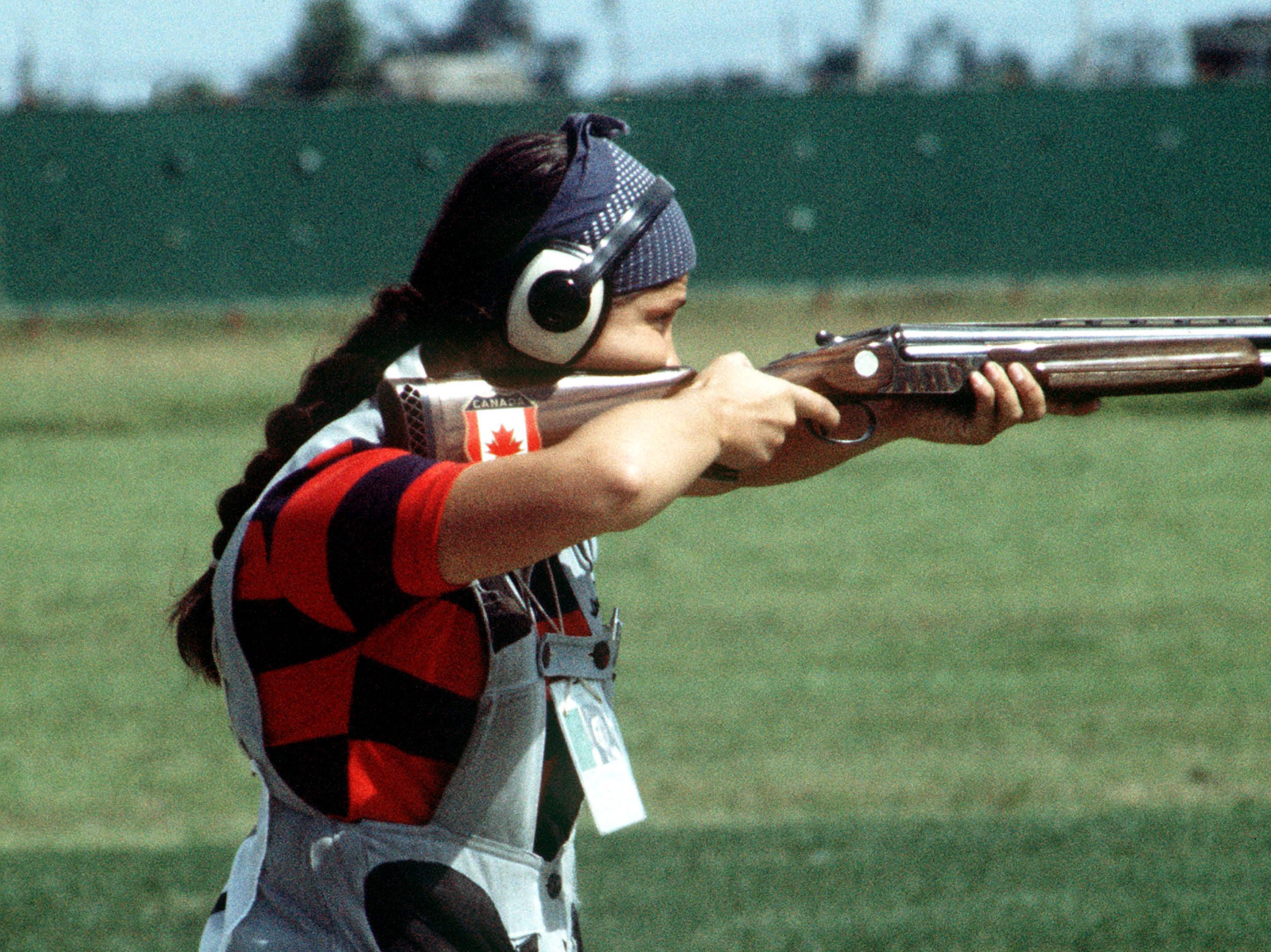
Susan Nattrass competes in the trap shooting event at the Montreal 1976 Olympic Games. (CP PHOTO/ COC/ MB) 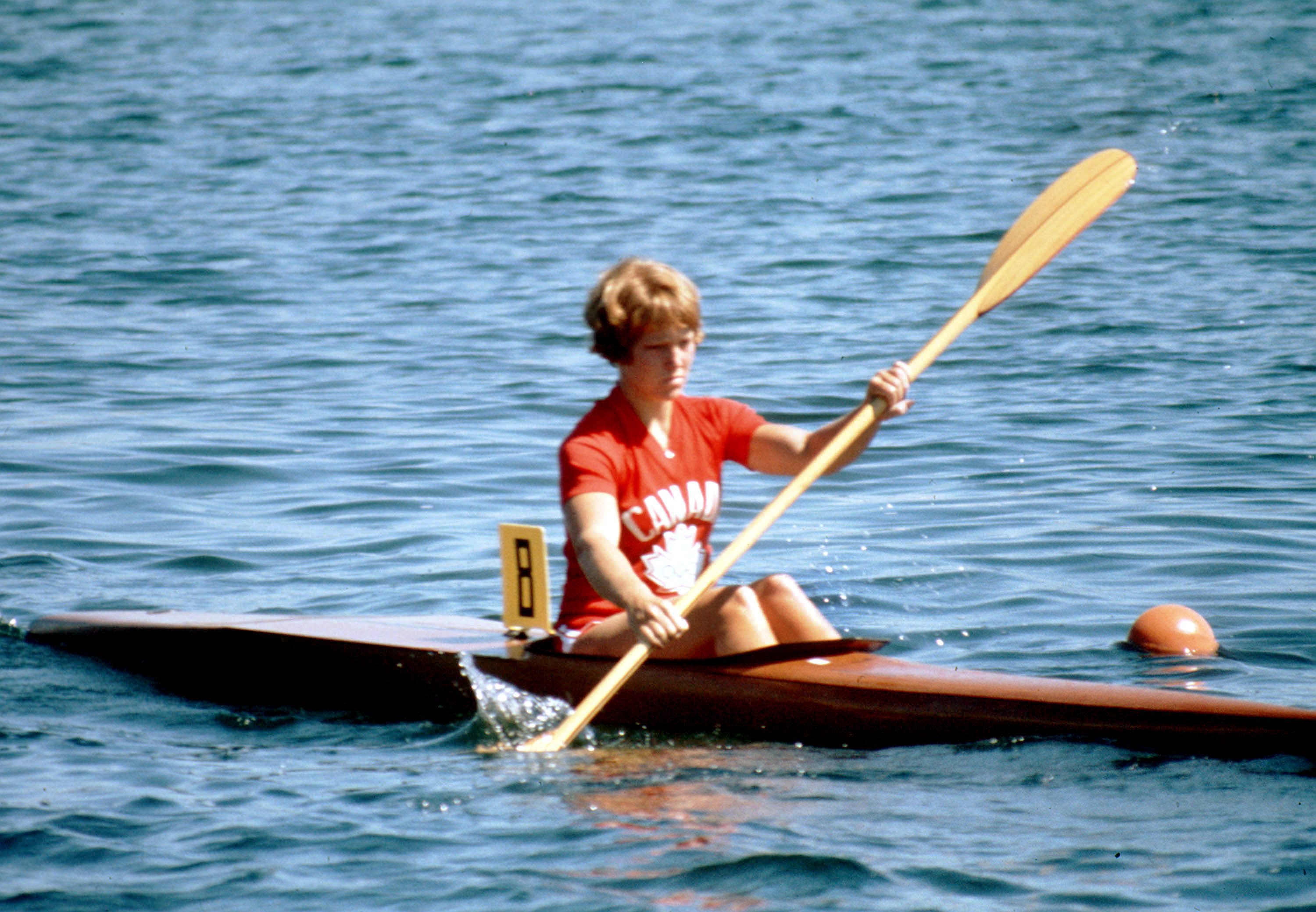
Canada’s Sue Holloway competes in a kayak event at the Montreal 1976 Olympic Games. (CP Photo/COC/RW)
Sue Nattrass became the first woman to ever participate in Olympic trap shooting, competing directly against men. In the first of her six Olympic appearances, she finished 25th in a field of 44 competitors.
Sue Holloway became the first Canadian woman (and just the second Canadian ever) to compete in both the summer and winter Olympic Games. Five months after she was a cross-country skier at Innsbruck 1976, Holloway paddled in two kayak events in Montreal.
Equestrian Ian Millar made the second of his world record-setting 10 Olympic appearances. Middle distance runner Penny Werthner would go on to become one of Canada’s most distinguished experts in the field of sports psychology.
Stars from afar
Arguably the most famed athlete to compete at Montreal 1976 was 14-year-old artistic gymnast Nadia Comaneci from Romania, who won five medals. She gained celebrity status after scoring the first ever perfect 10 in her sport. In the immediate moment, there was confusion about her historic feat as the scoreboard only had space for three digits with a pre-set decimal. It displayed her score as 1.00 but the in-venue announcer made it clear to all—including Comaneci—what she had just done.
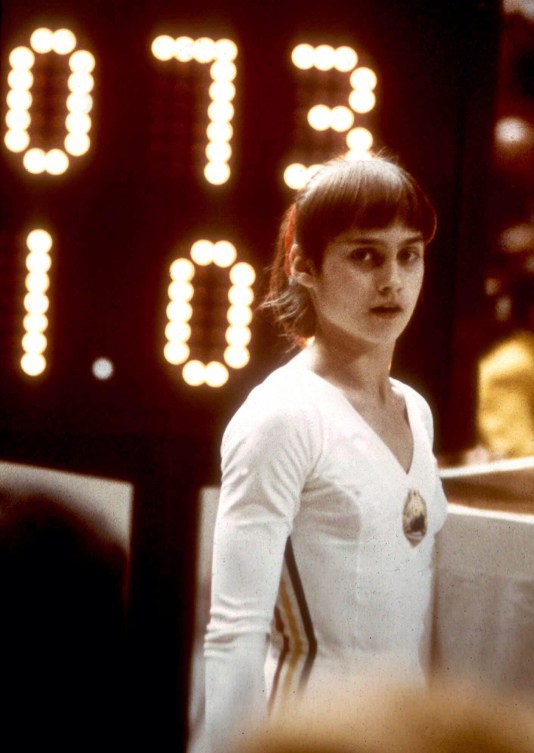
Romanian gymnast Nadia Comaneci stands before a scoreboard at the Montreal 1976 Olympic Games that displays her perfect 10 score as 1.0. (AP Photo/File) 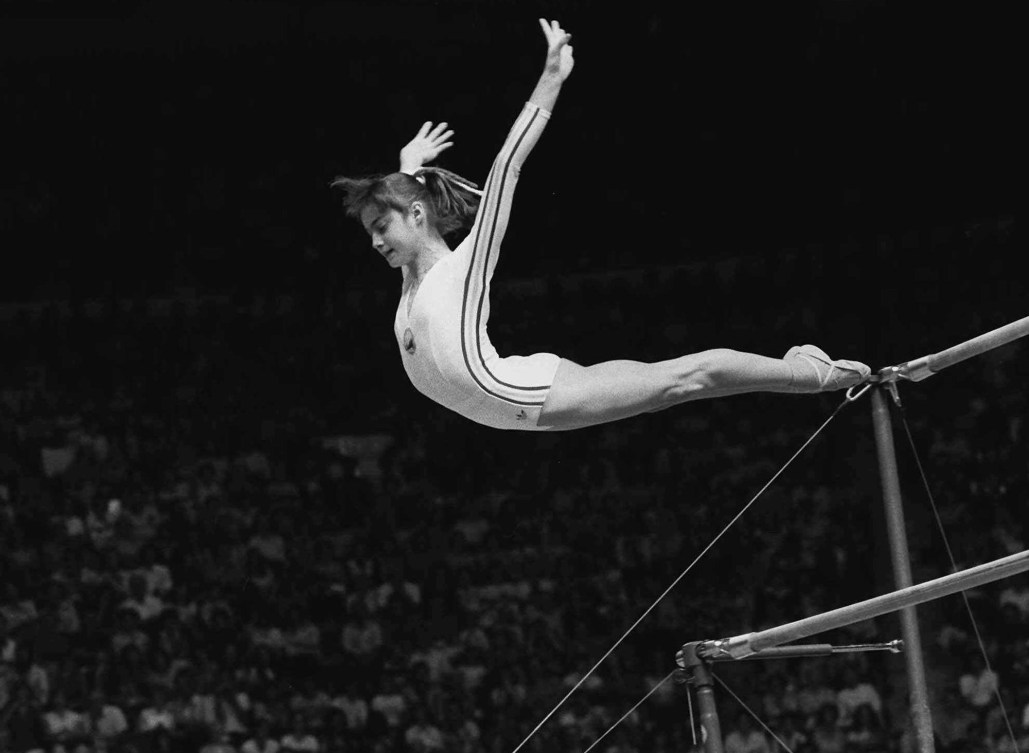
Nadia Comaneci, of Romania, dismounts from the uneven parallel bars during a perfect “10” performance at the Summer Olympics in Montreal, in this July 18, 1976 photo. (AP Photo/Paul Vathis)
The most decorated athlete of the Games was another gymnast, Soviet Nikolay Andrianov, who reached the podium in seven of the eight men’s artistic gymnastics events and won four gold medals including the all-around title.
There was an impressive performance on the track by Cuba’s Alberto Juantorena, who won both the men’s 400m and 800m events and remains the only athlete to ever do that double.
Lasse Viren was victorious in the 5000m and 10,000m for a second straight Games, extending the great Finnish legacy in those long distance events.
These Games also marked the arrival of American hurdler Edwin Moses, who set the world record in the 400m hurdles and would soon go undefeated in the event for a decade.
The boxing ring saw a couple of all-time greats win gold. Cuba’s Teofilo Stevenson won his second of three straight heavyweight titles, while these Games were the launch of Sugar Ray Leonard’s career.
Klaus Dibiasi of Italy won his third straight gold in the men’s 10m platform to become the first diver to win medals in four Olympic Games.
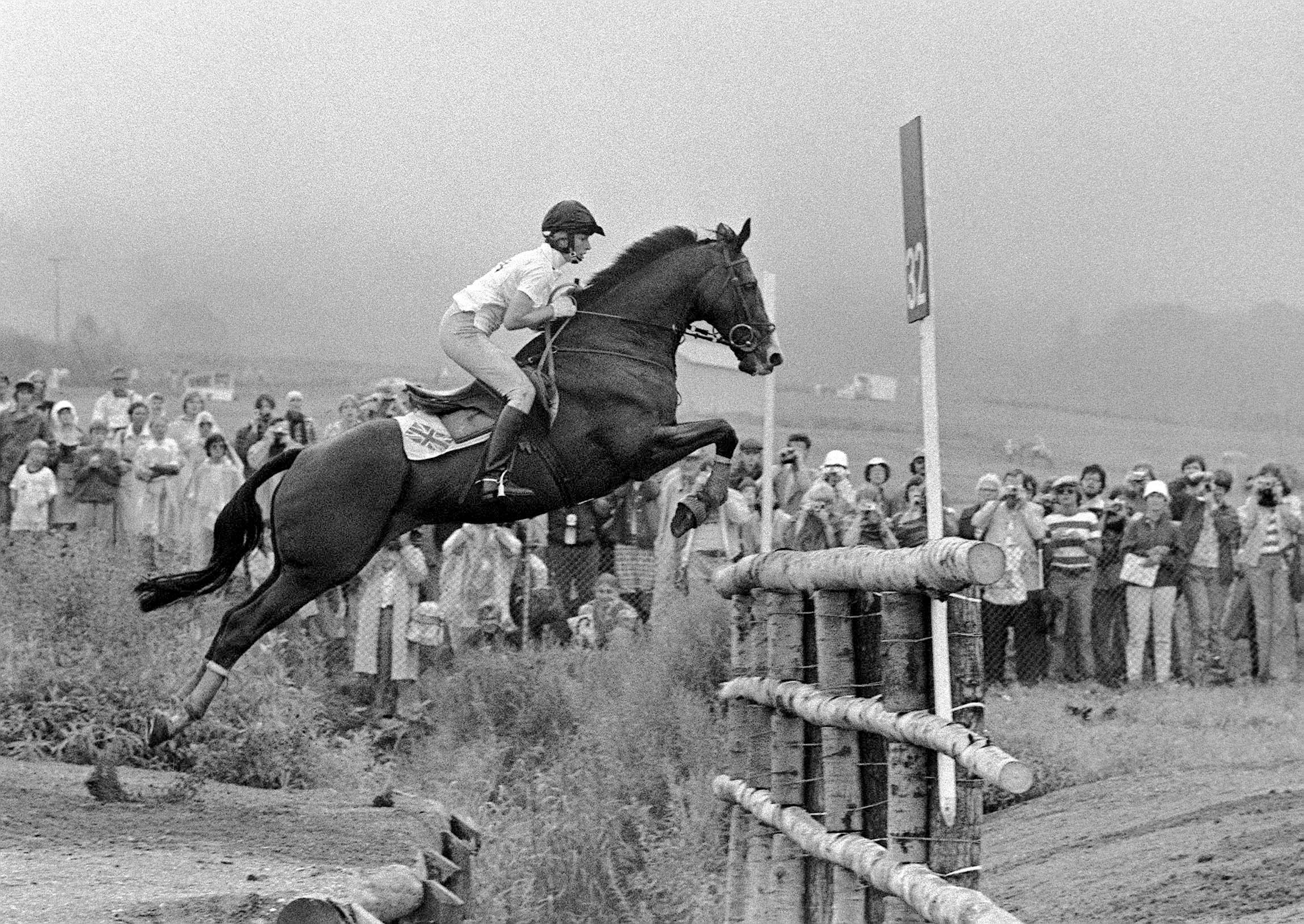
Princess Anne riding in the three day equestrian event in Bromont, Que., July 22, 1976. (CP Photo/CpM) 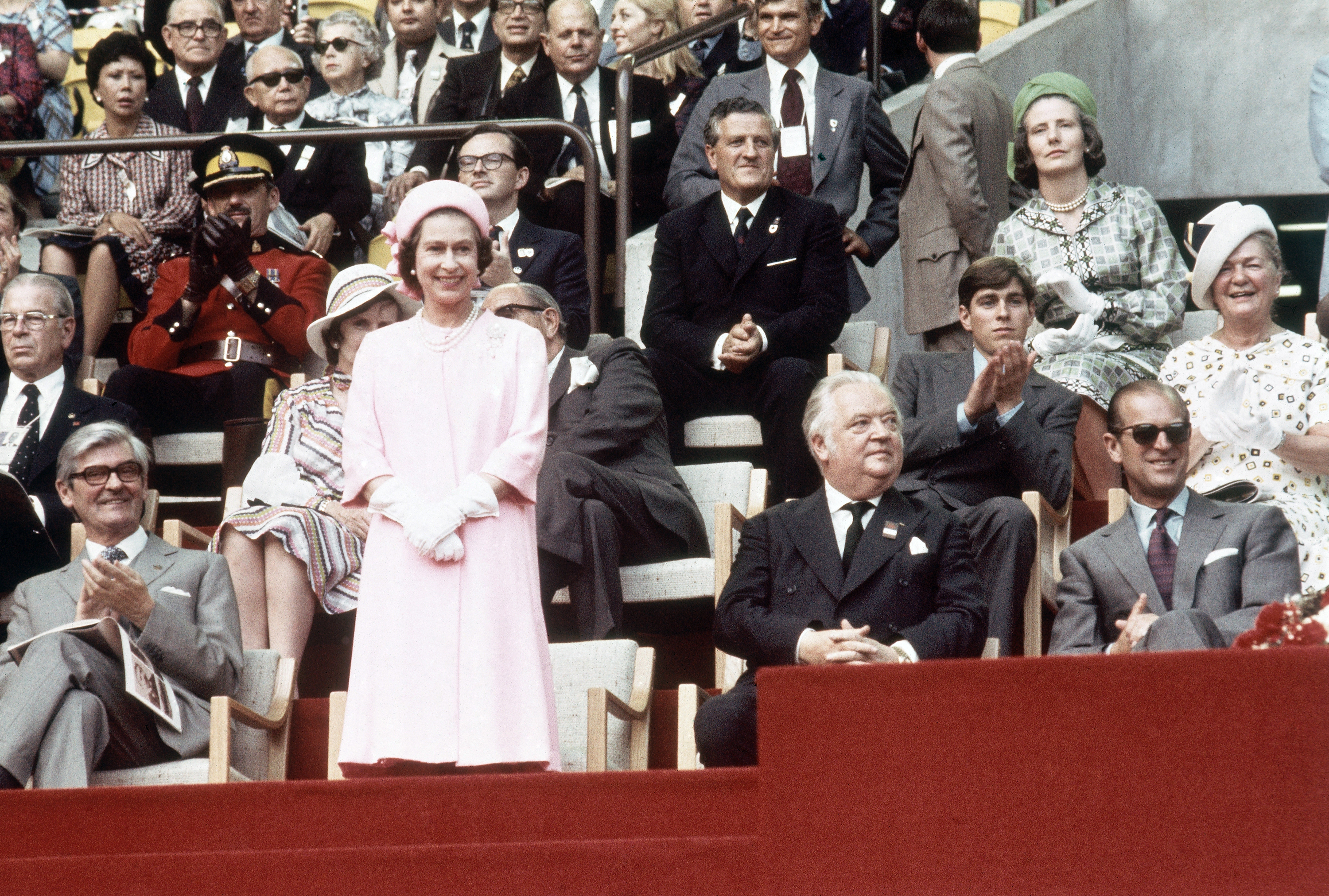
Britain’s Queen Elizabeth II, stands during the Opening Ceremony of the Olympic Games in Montreal, July 17, 1976. At right are Lord Killanin, president of the International Olympic Committee and Britain’s Prince Philip, the Duke of Edinburgh. (AP Photo)
Her Royal Highness Princess Anne, daughter of Queen Elizabeth II and accomplished equestrian, became the first member of the British Royal Family to compete at an Olympic Games. As the Queen of Canada, her mother had officially opened the Games before watching Anne compete in eventing.
New events for women
The Games provided greater opportunities for women to compete, with the addition of a women’s basketball tournament, a women’s handball tournament, and women’s rowing events.
There was still a ways to go for full gender equality in rowing, however, as there were just six events for women and eight for men. And the women raced only over 1000 metres, half the distance of the men’s events.
Venues that continue to impact Canadian sport
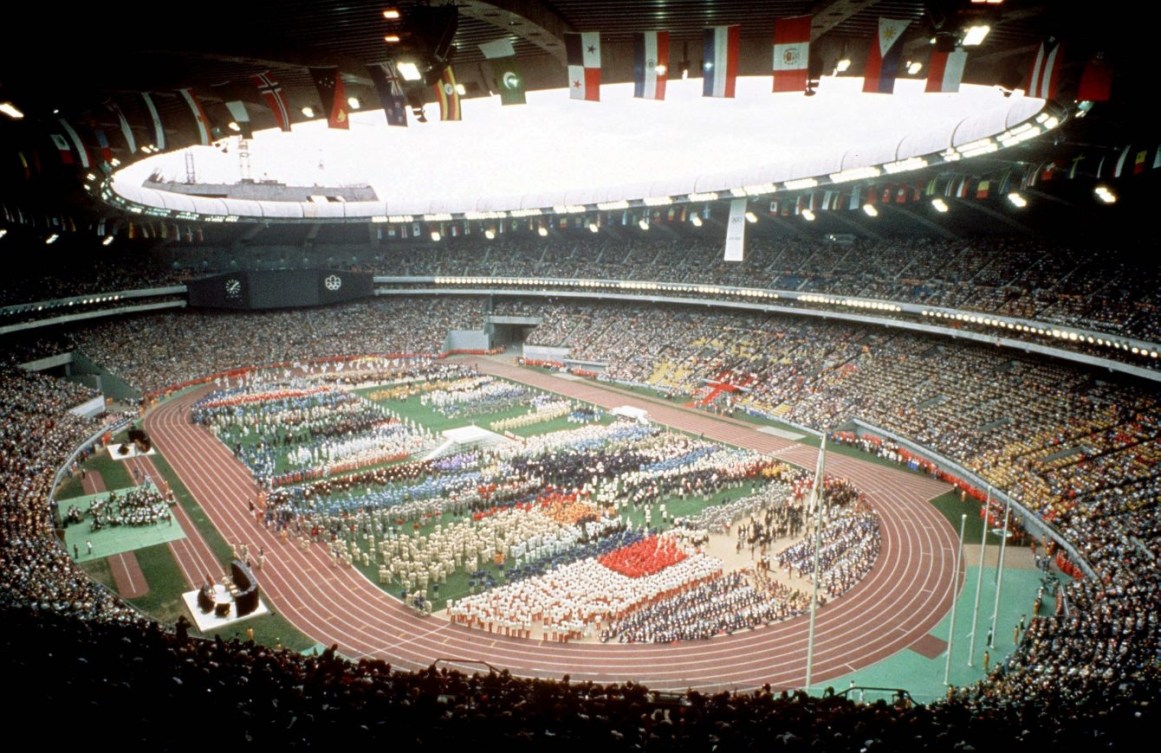
The Olympic Stadium, commonly known as the Big O, was the biggest venue constructed for the Games. But it was just one of 27 venues used, many of which still play a key role in Canadian sport and the development of Team Canada athletes.
Within the Olympic Park, there is the Maurice Richard Arena. Then, it hosted boxing and wrestling. Now, it is home to the national short track speed skating team that can always be counted on to win multiple Olympic medals.
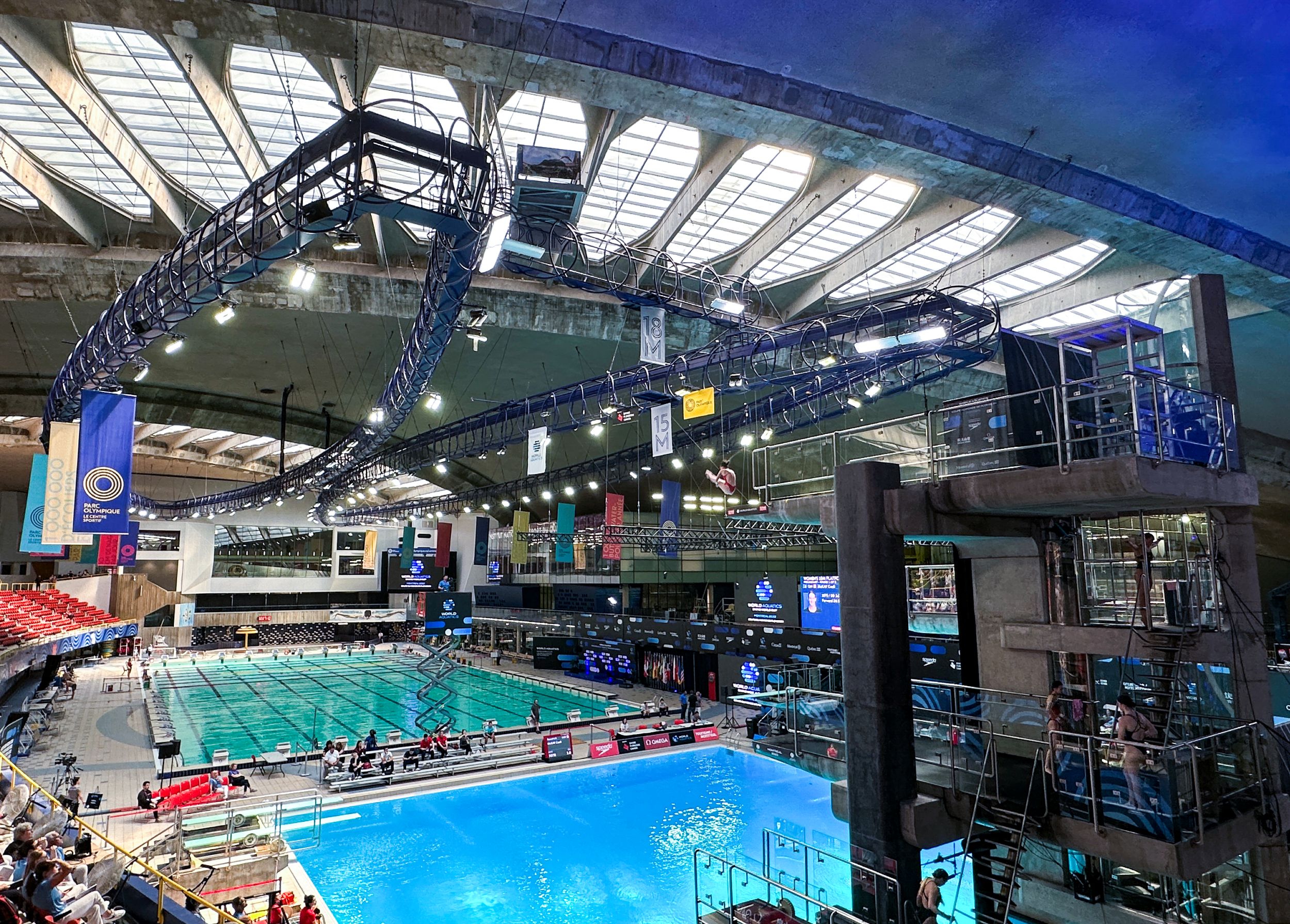
The Olympic Pool, located at the base of the Montreal Tower, was the site of swimming, diving, and water polo. Now, it is a primary training centre for the national diving team and continues to host major diving and swimming events, such as the Canadian Swimming Trials in 2026.
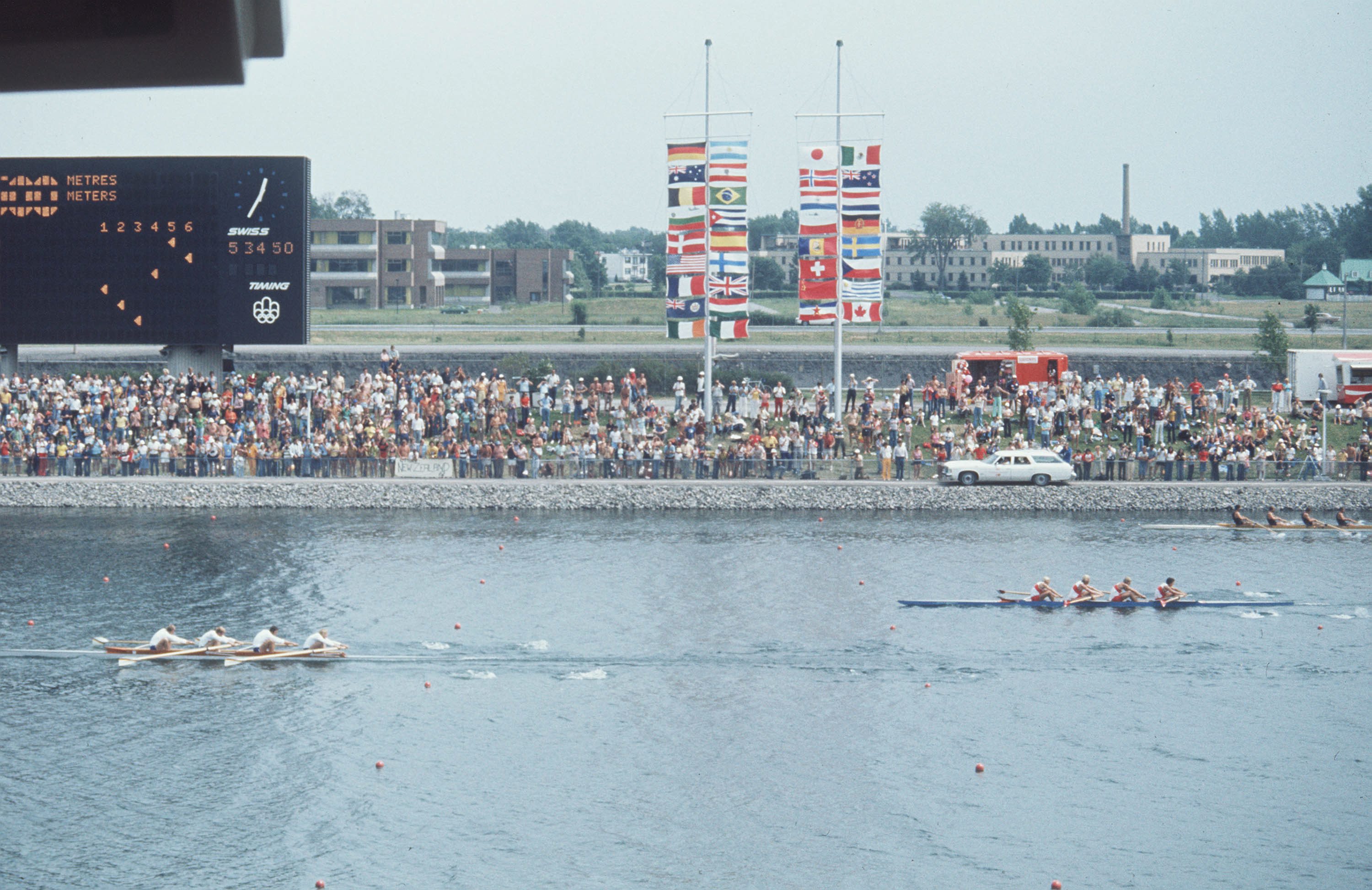
On Île Notre-Dame, the Olympic Basin hosted rowing and canoe/kayak. It’s now the Para Canoe National Training Centre and will welcome the world again in July 2026 for a stop of the ICF Canoe Sprint World Cup.
The Complexe sportif Claude-Robillard is a multi-sport training facility. It is the Quebec National Training Hub for Athletics Canada and the CAMO swim club also calls it home. It was built for the 1976 Games, hosting handball and water polo competitions, but was also a training centre for athletics, swimming, and field hockey.
A moment for the mascot
We can’t end this stroll down nostalgia lane without a shout out to Amik, just the second ever mascot for an Olympic Summer Games.
Amik, which means “beaver” in the Algonquin language, was a stylized take on one of Canada’s national symbols. Beavers are also known for their patience and hard work, two things every Olympian is familiar with.